
Tarn, Gard & Camargue
12 days, 11 nights
April 15 – 26, 2027 SORRY, THIS TOUR IS SOLD OUT
A genuinely small group, all inclusive tour for no more than 6 people.
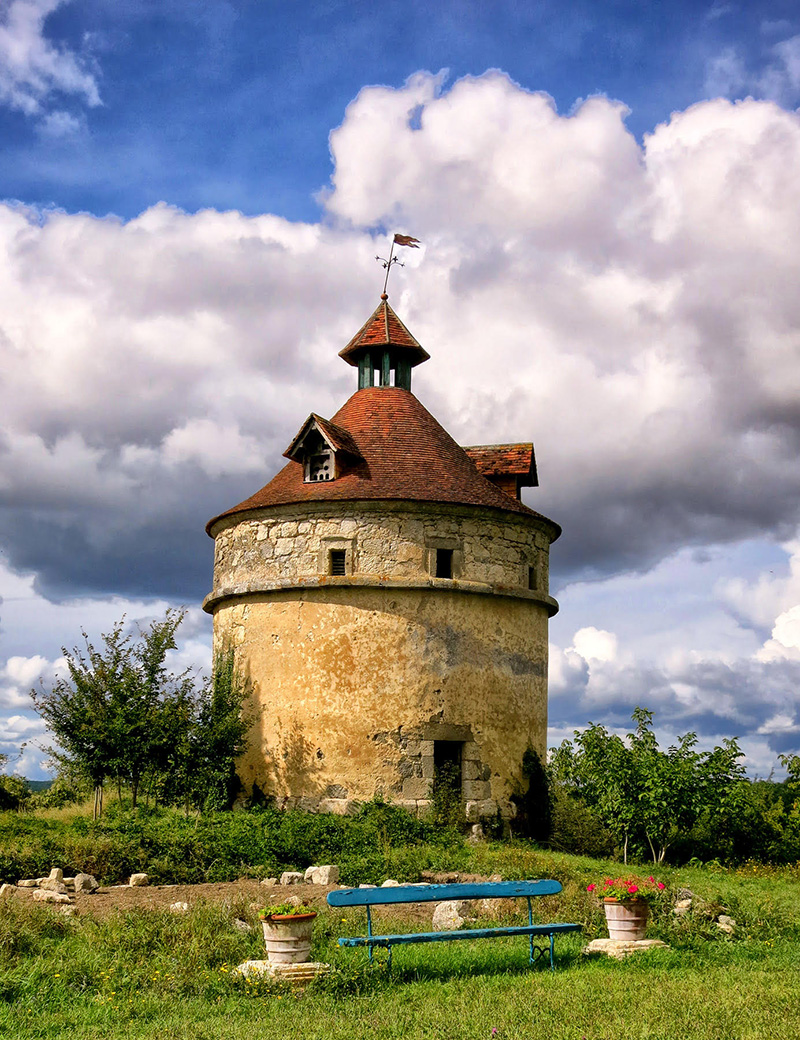
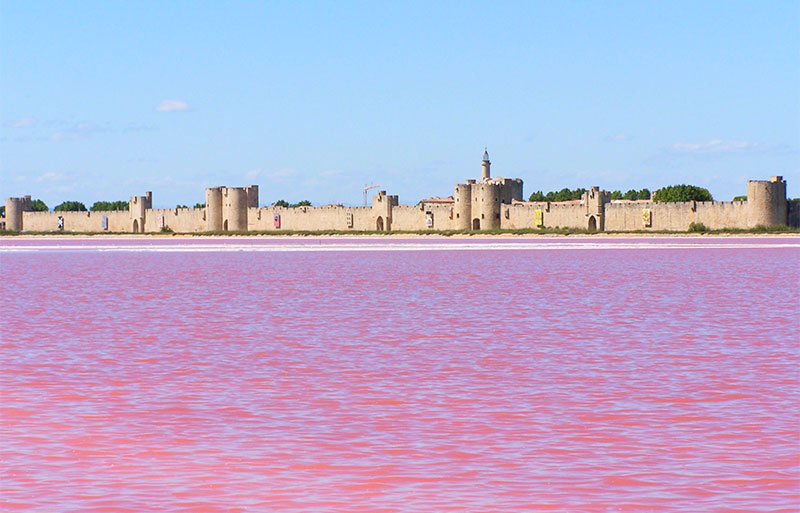
The Tarn, Gard and the Camargue are three of the thirteen departments in Occitanie, a merger of the former Languedoc-Roussillon and Midi-Pyrénées regions. We’ll visit the best of Occitanie’s sun-kissed regions, famous for beautiful villages, market towns overflowing with character, legendary history, and unique culture.This special twelve day tour takes a serpentine route through some of Occitanie’s most beautiful countryside in southern France beginning in La Ville Rouge, the red city of Albi in the southwest, and ending in the southeastern village of Aigues Mortes, a perfectly preserved walled village set among the salt marshes bordering the Mediterranean Sea.
Sample Itinerary
Day 1
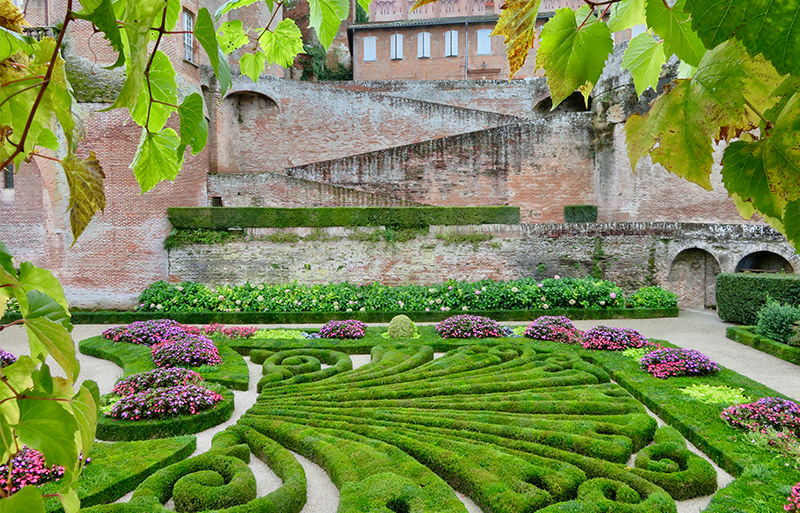
After your arrival at Blagnac Airport in Toulouse, we’ll drive to Albi, known as La Ville Rouge, the red city. Once settled at our hotel, Domaine du Buc we’ll have lunch in the old city center, then visit Sainte Cécile, Albi’s 13th century cathedral, the largest brick cathedral in the world, which dominates the skyline reflecting the grandiose vision of its medieval Bishop. The Palais de la Berbie, the former Bishop’s Palace, has the largest permanent collection of Henri Toulouse-Lautrec’s work, and the Palace Gardens offer a magnificent view of the Tarn River. The river bisects Albi and is spanned by three bridges. The first, one of the oldest in France dating from 1040, is still in use today. The second was built in the 19th century, and the third, a railway bridge, was designed by Gustave Eiffel, of Eiffel Tower fame.
Day 2
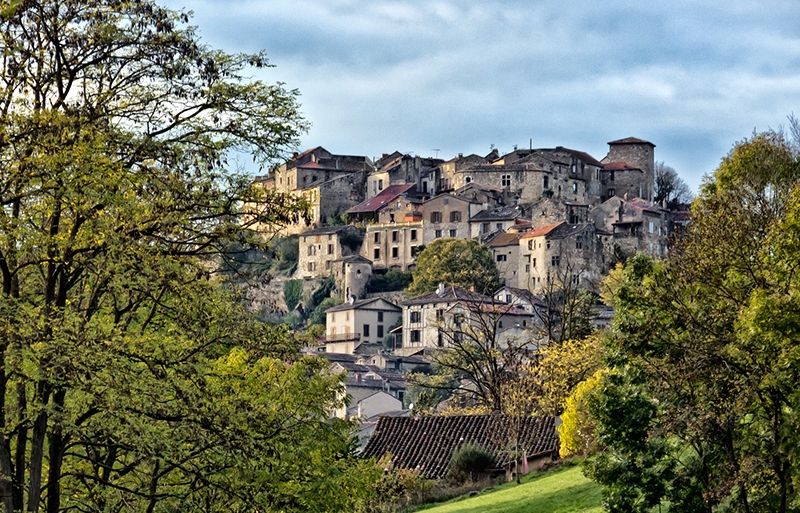
Cordes-sur-Ciel was the first bastide, fortified village, in France. It was built by Raymond VII, one of the Counts of Toulouse in 1222. This charming medieval town is perched on the top of a hill known as Puech de Mordagne, often giving the illusion of Cordes floating in mid-air. By the beginning of the 20th century Cordes had fallen into ruinous decay, but luckily in the mid-1940s the village’s fortunes improved and it became an artists’ center. The writer Albert Camus moved here as well as the painter, Yves Brayer, who oversaw the village’s transformation. In the afternoon we’ll visit Puycelsi, another charming, though smaller, fortified village hidden on the edge of the Grésigne forest and walk its ramparts for spectacular views over the valley below. * These are hilltop villages with cobblestone streets. In order to fully appreciate the visit you will need to be able to walk up to the historic center.
Day 3
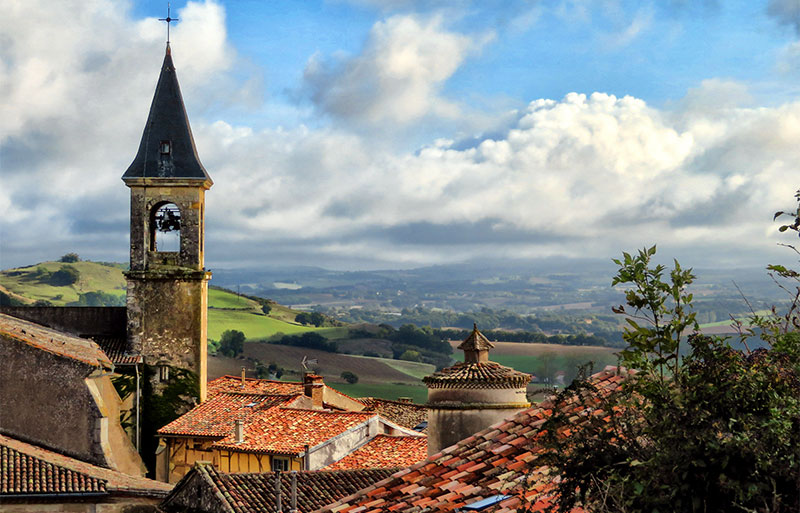
Amazingly, the painter Henri de Toulouse-Lautrec never visited the village of Lautrec, just a stone’s throw from Albi. Founded in 940 the village developed around its ideal defensive location. From the height of its rocky, windmill-topped peak there is a superb view of the Agout Valley, the Black Mountains, and the Pyrenees. Lautrec gained prominence due to its family of Viscounts from which Toulouse-Lautrec descended The rural area surrounding the village is renowned for growing pink garlic, Ail Rose de Lautrec, as well as for its Bleu de Pastel, the dye made from the woad plant. We will visit a Bleu de Pastel workshop to learn about the process which created the region’s wealth from the 14th to the 16th centuries, and enjoy lunch in a local restaurant.
Day 4
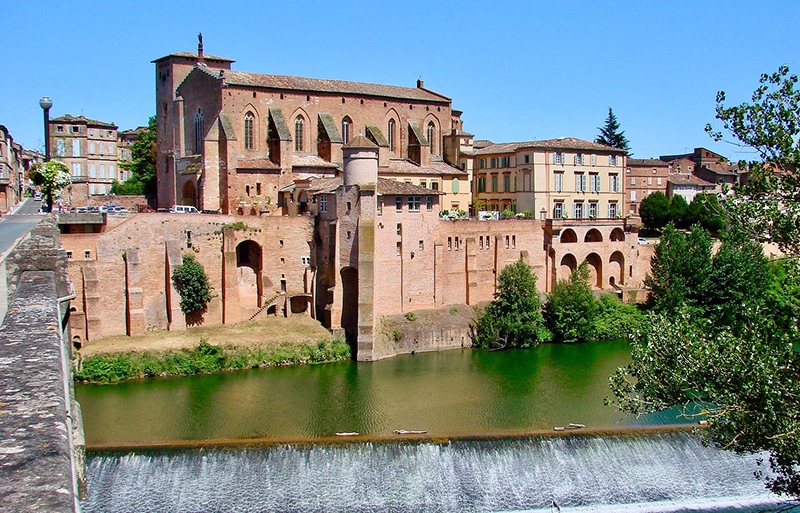
Gaillac was founded in the second century by the Gauls, who created a port along the Tarn River. When the region was conquered by Rome, Gaillac gained notoriety and prosperity for its wine. Roman merchants transported the wine to Bordeaux, shipping it down the Tarn River to the Garonne River, which runs all the way to the Atlantic.The wine of Gaillac is France’s oldest wine, first fermented almost two thousand years ago from wild vines found in the forest of Grésigne. Gaillac wine was one of the two Grands Crus, great wines, of Roman Gaul, centuries ahead of the wines of Burgundy and Bordeaux. Depending upon your tastes we may visit Gaillac’s most notable wine cooperative, Maison Labastide. We’ll enjoy lunch at Vigne et Foule.
Day 5
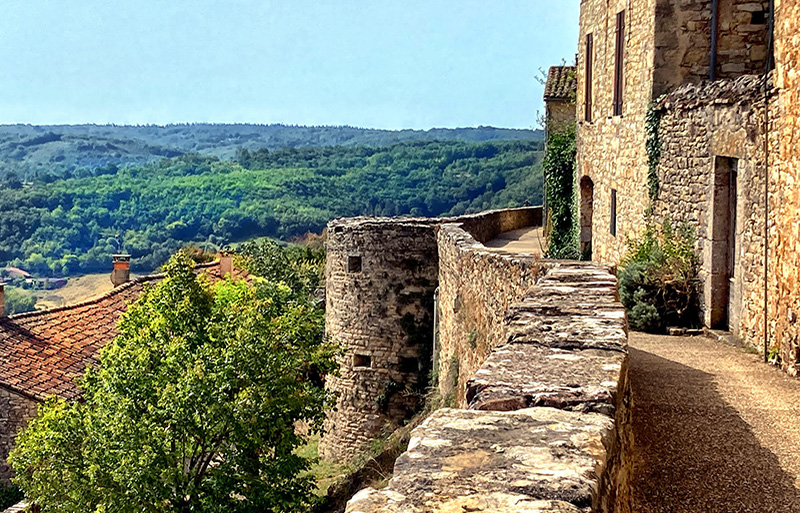
Today we have 3 experiences to choose from: we can visit the hilltop village of Najac, Beaucastel, and the Abbey of Beaulieu-en-Rouergue. Perched above the Aveyron gorge, the Royal Fortress of Najac immerses you in the heart of the Middle Ages with its high walls, keep, and arrow slits. It was in this fortified castle where the Knights Templar were imprisoned at the beginning of the 14th century. Belcastel was built over a thousand years ago on a gigantic rock. This magnificent fortress rises above one of Les Plus Beaux Villages de France. Only recently was this private chateau, with its lush courtyards, medieval chapels, prison and superb views, opened to the public. The Abbey of Beaulieu is home to an exceptional collection of modern art surrounded by a garden of a thousand roses.
Day 6
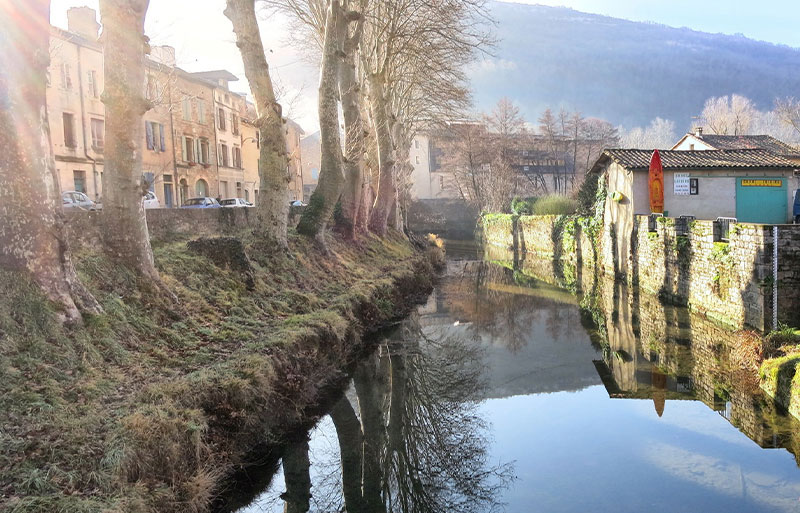
Saint Antonin-Noble-Val is a geographically beautiful medieval village cradled between the confluence of the Aveyron and Bonette Rivers, at the bottom of the Aveyron Gorge. It is situated on the border of the Quercy, Albigeois, and Rouergue regions. Legend has it that the martyred body of Saint-Antoninus, sailed as far as it could in a boat driven by two white eagles. In the 8th century a monastery was built in his honor. Saint-Antonin-Noble-Val is a jewel that can be visited year round, but it is on Sunday morning, during the weekly farmers’ market, that it is its most colorful. Local producers highlight regional and seasonal products, as well as arts and crafts. The film, The Hundred Foot Journey, directed by Lasse Hallström, starring Helen Mirren was filmed throughout the village.
Day 7
Day 8
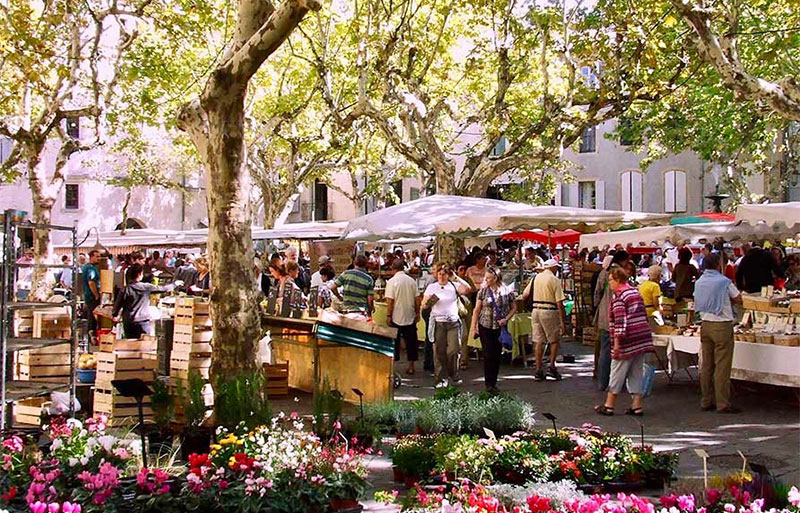
The elegant city of Uzès is one of the best kept secrets of the Gard, a mere 25 km north of Nimes, set amidst beautiful countryside. This splendid village is filled with Renaissance and Romanesque architecture and has the best Saturday farmers’ market held under the arcades of the Place aux Herbes, and in the surrounding streets. The medieval town is a maze of cobblestone alleys and shady squares lined with 17th and 18th century mansions. Uzès’s Fenestrelle Tower, is the only cylindrical bell tower in France. The former Episcopal Palace houses the Georges Borias museum whose collections retrace the history of Uzès from Prehistory to the present day. There are so many sensual pleasures to enjoy in Uzès it will be hard to know where to start.
Day 9
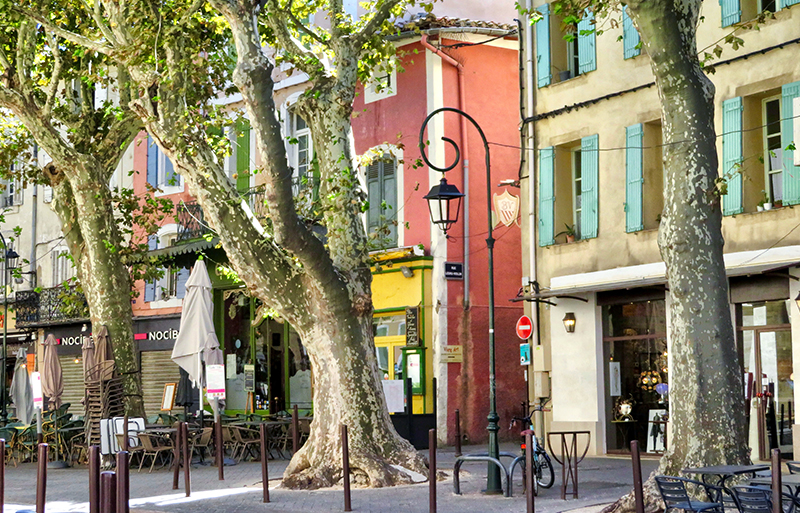
We’ll spend Sunday in L’Isle-sur-la-Sorgue, just over the Bouches-du-Rhône department border. L’Isle-sur-la-Sorgue resembles a miniature Venice with its canals and bridges. Of its original 70 water mills only 9 remain, powered by thecrystal clear Sorgue River which cuts an intricate path through the village. L’Isle is the European center for antiques and second hand stores. Every Sunday of the year, the village combines its antique market along the outer ring of the village, while its farmers’ market fills every nook and cranny inside the village’s criss-crossed streets. A day in L’Isle is a delightful feast for the senses, and a flâneurs’ paradise.
Day 10
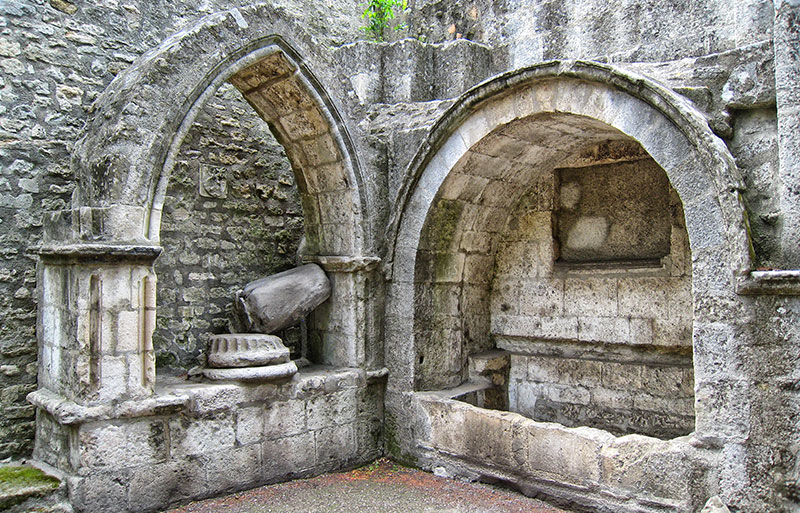
Today we’re going to dip into the Provence–Alpes–Côte d’Azur region to visit the city of Arles considered the gateway to the Camargue. It is the land of the Roma and the Gardian cowboys. Arles was also the home of Vincent Van Gogh during part of his life. We will follow the footsteps of this renowned painter who settled in Arles in 1888. Once a metropolis of Roman Gaul, Arles became a symbol of Christianity which can be seen through the Alyscamps burial grounds, the cloister of St. Trophime, the amphitheater, Les Arènes, and the Roman baths of Constantine, which we’ll visit after lunch in one of the many colorful restaurants.
Day 11
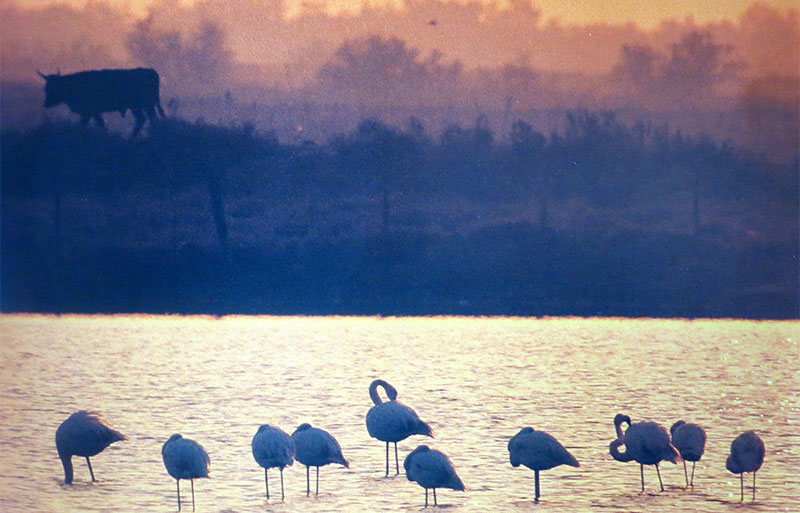
The Camargue is a mesmerizing wilderness of flood-lands, salt flats, wildflowers and lagoons, pristine sandy beaches, white horses, black bulls and pink flamingos, part of the UNESCO Biosphere Reserve comprising over 370,000 acres. The village of Saintes-Maries-de-la-Mer is set against the backdrop of the Mediterranean located at the tip of the Camargue. We will tour the Fangassier Pond, a pink flamingo breeding area on the Domaine de Méjanes farm, and the ornithological Port du Grau, bird sanctuary. We’ll visit Notre-Dame-de-la-Mer church, home to Saint Sarah, patron saint of the Roma, who according to legend, accompanied Mary Magdalene, Mary Salome, and Mary Jacobe from the Holy Land, to this now sacred Roma site.
Day 12
After our last breakfast together we will either drive back to Toulouse for your scheduled departure from Blagnac Airport, or the Gare de Nîmes, in Nîmes to catch your train to Paris. Depending upon your schedule you may want to spend the night in Toulouse, then taxi to the airport, or spend the night in Nîmes, and take an early train to Paris.12 days, 11 nights
April 15 – 26, 2027 SORRY, THIS TOUR IS SOLD OUT
$7,495.00 per person
These are genuinely small group, all inclusive tours for no more than 6 people.
Register your interest for next time…

Slow Food

Department du Gers

French American Chamber of Commerce
Coeur Sud Ouest
Tourism Pays d uzes

Occitanie

Landes
Albret Tourism
Pays Basque

Bonjour Paris

Complete France

France Today

Frenchly
Slow Travel Tours
French Country Adventures
66 Chemin du Nouet Lieu dit Aux Arbeils
32800 Ayzieu
+33 633 328 961
Follow Me
