
 The French Basque Country originally belonged to Eleanor of Aquitaine, and was part of what was considered England’s first colony after she married Henry II, King of England. After the Hundred Years’ War ended in 1468, the region formally returned to France. The Spanish Basque Country, on the other hand, was part of the Kingdom of Navarre, a medieval state ruled over by a series of monarchs until 1515, when most of the region became part of modern Spain. Both the French and Spanish Basque Countries are a cross-cultural region that has a very distinctive culture, including its own language, customs, festivals, and music.
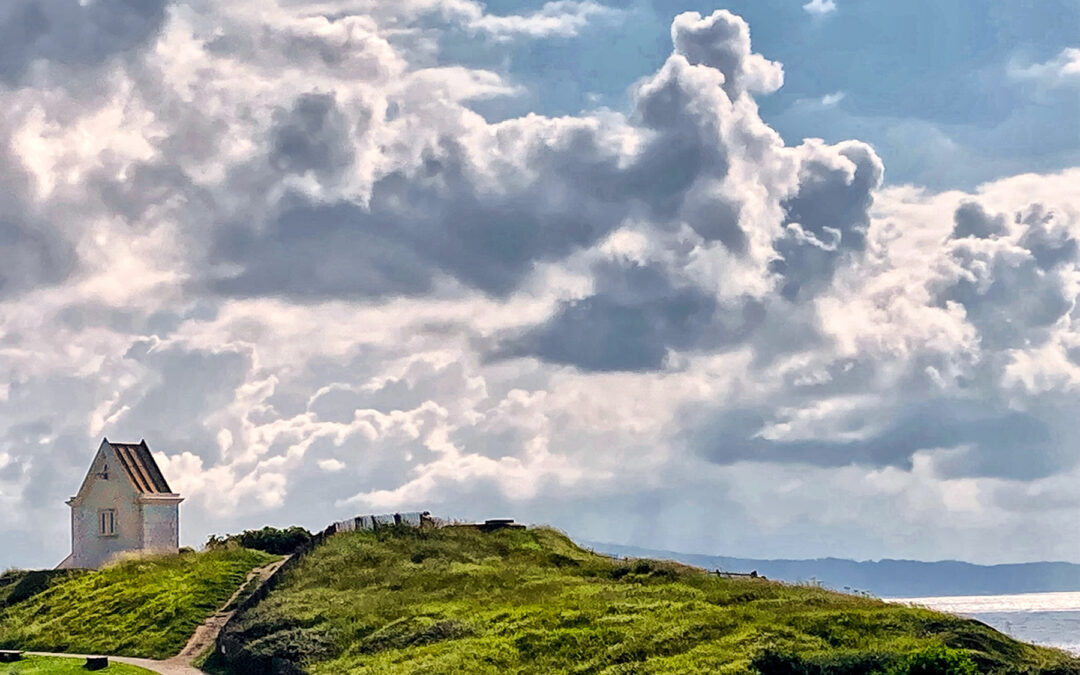
The landscape of the Basque Country is characterized by breathtaking coastal vistas and tranquil farms. The valleys are criss-crossed by rivers and streams, and dotted with cream-colored cows, equestrian farms, and tufted white sheep. Wooded copses folded into the landscape often conceal a multitude of birds and wildlife. With few towns or villages to interrupt a leisurely ride, the countryside is delightful to walk or drive through. However, if you are looking to explore some of the most beautiful towns in French Basque country, here are some exceptional options.
These Towns in the French Basque Region are Worth a Visit
1. Ainhoa

The unspoiled village of Ainhoa was founded in the 13th century by a baron from Navarre to keep the English out, and to make money from pilgrims on the route to Santiago de Compostela. Its main street is lined with traditional Basque white-washed houses trimmed with red, blue, and green half-timbering, with matching shutters and terracotta roof tiles. This style of Basque house, also called an extea, is much more than a simple home. It was, and still is, the axis from which Basque life revolves. The red represents Liberty, the green Hope, and the white Faith. Although each house is slightly different, the three colors give an overall coherence to the region.
Be sure to look for the lintel over the door of the Maison Gorritia on the town’s main street, which relays the story about the mother who built the house in 1662 with money sent home by her son from the West Indies. And don’t miss Ainhoa’s small, but unusual cemetery, dating from the 16th and 17th centuries. If you put a euro into the box located on the back left wall, progressive lighting will illuminate the altar, accompanied by choral music. Afterwards, walk to the Sanctuary of Notre Dame-de-Aranzazu, built in 1489, which overlooks the village and offers panoramic views of the valley below.
Market Day: Thursday (in July and August only)
Restaurant Recommendation: Ithurria
2. Bayonne

This lively city began its recorded history in the third century as a strategic Roman port traversing both sides of the Adour River. By 1151 the British ruled the city, followed by the French in 1578. The city’s trades were diverse—from weaponry (such as the infamous bayonet) to chocolate (as Jewish refugees fleeing the Spanish Inquisition in the 1600s brought their recipes with them).
Bayonne’s historic medieval center is full of brightly colored, half-timbered buildings, and crowned by the stunning UNESCO World Heritage site that is the 12th century gothic Cathédrale Sainte Marie de Bayonne, whose twin steeples rise majestically above the city center. There are gourmet food shops, boutiques, and a very lively Saturday market. The small, easily accessible Basque History Museum will give you a succinct overview of the town’s past, and a fascinating pictorial narrative of the Basque people. Finally, you mustn’t leave without tasting the organic chocolates from Cazeneuve, the oldest purveyors of chocolate in Bayonne since they opened in 1854.
Market Day: Saturday
Restaurant Recommendation: La Grange
3. Biarritz

An eclectic Belle Époque village, Biarritz was once a trade route for the Phoenicians on their way to England. It remained a safe harbor until the Middle Ages, when it became a hub for Basque whaling fleets that took fearless sailors as far as the coast of Newfoundland. So admired were their nautical skills, that Christopher Columbus used a Basque navigator on his voyages.
By the 1800s Biarritz had veered away from whaling as a mainstay and turned itself into a holiday resort by the sea after Napoleon III and his wife, Empress Eugénie, established their summer court on the beach. Film and cultural luminaries followed, such as Frank Sinatra, Ava Gardner, and Brigitte Bardot. From stunning walks along the sea, to its world renowned surfing, there is much to recommend a visit. A host of shops and restaurants line the winding village streets, and the town is home to five different surfing schools, 10 golf courses, and two Thalassotherapy Spas, which use salt water to alleviate stress (or simply pamper guests). Accommodations range from six luxury hotels to 65 modest ones. And should you be looking for an off-season spot to relax or recuperate, the peace and quiet of Biarritz is ideal.
Market Day: Wednesday (St. Martin Quartier) and Friday (St. Charles Quartier)
Restaurant Recommendations: Bellevue by Miremont, Le Café de Paris

Cambo-les-Bains is one of the hidden gems of French spa culture. The benefits of the town’s waters were already appreciated in Roman times, but it wasn’t until 1761 that the first thermal baths were built. The sick and the famous came to Cambo to be cured, as did Edmond Rostand, writer of the play Cyrano de Bergerac. At the suggestion of his Parisian doctor, he arrived in 1900 hoping to be cured of pleurisy, and was so taken by the area that he bought some land and had a sumptuous house built. His home, the Villa Arnaga, is now a heritage site and museum devoted to his life. Lush gardens, some wild and others formal, like the classic André Le Nôtre-inspired plan, blend seamlessly into the 15-hectare wooded landscape, where peacocks freely roam among the many shaded, hydrangea-lined paths.
Market Day: Friday; Wednesdays between March 1 and December 31 there is a Flea Market as well
Restaurant Recommendation: Terrae
5. Espelette

Espellete is nestled in the Soule Valley of the French Basque Country. It is fertile farmland with gourmet treasures including Piment d’Espelette, the popular spice made from dried Espelette Peppers, which decorate the walls of houses, shops, and restaurants throughout the village. Originally from Mexico, this prized pepper is protected with an AOC (Appellation d’Origine Contrôlée) label.
Around the corner from the market, in the heart of the village, sits a seigneurial castle built in the year 1000 that was destroyed in the Thirty Years’ War (1618-1648), rebuilt, then bequeathed to the inhabitants of the village. Today, the Château des Barons d’Ezpeleta houses the town’s tourism office and town hall.
Market Day: Wednesday
Restaurant Recommendations: Hôtel Euzkadi, Choko Ona

Considered one of the most beautiful villages in France, La Bastide-Clairence was founded by the King of Navarre in 1312 and settled by Gascons. The village church, Notre Dame de La Bastide-Clairence, is distinguished by a unique courtyard cemetery paved with tombstones, and just behind the village you can see the old Jewish cemetery. (A remaining tribute to the community of Sephardic Jews who fled the Spanish Inquisition and settled here.)
Today, the town’s 700-year-old arcaded square is lined with arts and crafts workshops, and La Bastide-Clairence hosts the annual Basque Country Ceramics Market. Held in early September, it features pottery, earthenware, stoneware, and other works by some 50 potters and ceramists from France and Europe at large.
La Bastide-Clairence also has the oldest pelota (trinquet) court in France, dating from 1512. The pelota court was originally used to play Jeu de Paume, a ball-and-court game that was the precursor to tennis, but played without rackets. If you’re there around 5:30 in the late afternoon, the local bar next to the court is open and you might get to see a game being played.
Market Day: Tuesday
Restaurant Recommendation: Les Arceaux
7. Saint-Jean-de-Luz

The elegant and very pretty resort village of Saint-Jean-de-Luz hugs the Bay of Biscay very close to the open Atlantic, offering a picturesque panorama. Its seaside promenade is lined with gnarled Tamarisk trees, and capped by white fisherman’s lighthouses. Everything is simple: white washed buildings with the ubiquitous red, green, or blue wood trimmings of the region. The only tall building to break the serene arc of the village is the Belle Époque Grand Hôtel Thalasso & Spa, built in 1909.
Saint-Jean-de-Luz’s wealth originated from the pirates that frequented the port, and its fishing and whaling industry. Today it’s still a working port, gathering seafood such as trout, wild salmon, sardines, tuna, cod, and anchovies from the Atlantic and surrounding rivers.
The town’s most noteworthy event was the marriage of King Louis XIV, the “Sun King,” to Maria Theresa, the “Infanta of Spain” on June 9, 1660 in the St. Jean Baptiste church, located halfway down the main tourist shopping street. The church, built in the 15th century, is one of the most unusual you’ll ever see. There are three tiers of oak galleries, a gilt altar, and a whaling ship model suspended from the ceiling. Don’t miss the Maison de L’Infante—an imposing four-story coral-colored stone building where the Infanta stayed with her future mother-in-law, Anne of Austria, before her wedding—nor the Maison Louis XIV (6 place Louis XIV) where Louis stayed.
8. Saint-Jean-Pied-de-Port

Saint-Jean-Pied-de-Port rests in a green hollow at the foot of the pass of Roncevaux, an ancient gateway over the Pyrenees between France and Spain. An 11th century fortified village at the confluence of the Nive and Laurhibar rivers, it’s just 30 miles from the Basque coast and well worth a visit. Throughout its early history it was a hub for travelers, merchants, armies, and pilgrims on their way to Spain. Since the Middle Ages the village has been the last stop on the Camino de Santiago in France before the legendary crossing over the Pyrenees.
Restaurants, shops, and hotels are clustered on both sides of the Vieux Pont. Facing the bridge over the Nive river, right under the bell tower, you can’t miss the very plain Gothic Notre Dame du Bout du Pont church, built in the 13th century. The steep, cobblestoned rue de la Citadelle will lead you up Mendiguren Hill, first to the Prison des Évêques, home to bishops in the 15th century, and later used by local authorities to lock up the poor who couldn’t pay the local salt tax. Further up you’ll pass Les Amis du Chemin de Saint-Jacques, where one officially registers as a pilgrim, picks up their pilgrim passport, and gets information about the route. And if you climb to the top you’ll not only find spectacular views, but also the 17th century Citadel, the main stronghold during conflicts between France and Spain.
Restaurant Recommendation: Le Relais de la Nive
9. Sare

Sare is located at the western edge of the Pyrenees mountains at the foot of La Rhune, a mountain considered to be sacred in Basque mythology. It is covered in dolmens, stone circles, and other neolithic monuments, and its summit is reportedly an akelarre, or ritual meeting place for witches. Until the 18th century, local villagers paid for a monk to live as a hermit at the top of the mountain to keep the witches away. Today you can reach the top of the mountain by riding the La Rhune train, an authentic rack railway built in 1924, which will take you up 3,000 feet to the top in 35 minutes for spectacular 360 views.
The village also once boasted a unique history of night smuggling, which was considered a local sport: Basque smugglers crossed from the French border to the Spanish border to transport alcohol, tobacco, food, and animals, then back again without being caught. Luckily these days, the only smuggling you’ll be doing is trying to fit as much Gâteau Basque in your stomach as possible. The flaky pastry crust exterior paired with a creamy custard-like filling, with a delicate almond flavor and a dark cherry preserve center, make this dessert absolutely irresistible. Sare even has a museum devoted to it!
Restaurant Recommendation: Akoka, Trinquet Pleka
10. Urrugne

Urrugne is a small town located between Saint-Jean-de-Luz and Hendaye along the Basque Corniche, a stretch of rugged coastline bordering the Atlantic. Due to its proximity to Spain, Urrugne suffered from multiple wars between the two countries until the Treaty of the Pyrenees was signed in 1659 between King Louis XIV of France and King Felipe IV of Spain.
The Napoleonic Wars also left their mark on Urrugne, and it is possible to find vestiges of these events at the Château d’Urtubie, built in 1341. Owned by the same family since its construction, this fortified castle is a must-see for history buffs. During your visit, you can explore this exceptional château, plus its English-style park, orangery, and herb garden, through guided tours. The current Count Lauren de Coral, a very charming Frenchman, will give you a brief history of the château in English if you book in advance.
In the nearby Socoa district of Urrugne, gourmets will delight in a tour of Maison Pariès. Founded in 1895, this artisan pâtisserie has been creating delectable sweets ever since. Enjoy a guided tour to explore the secrets of making the region’s famous Basque macarons, while tasting exceptional handcrafted pastries.
Market Day: Saturday
Restaurant Recommendation: La Ferme Ilharregui Baita
11. Hendaye

Hendaye is the last coastal town in France before Spain. Ideally located for enthusiasts of water sports, hiking, golf, and cycling, it attracts sun-loving tourists every year. Stroll along one of its large, pristine beaches, where you can take a swim, dive, surf, or admire the pretty seafront neighborhoods. There is also a 25 kilometer (15.5 mile) path along the coast which offers beautiful panoramas from Hendaye to Guéthary, a very small, charming village just before Biarritz.
North of the city center is the Château d’Abbadia, a Neo-Gothic folly built between 1864 and 1884 for Antoine d’Abbadia, an astronomer, ethnologist, and intrepid traveler. There are guided tours of this amazing château, which is perched on emerald green cliffs overlooking the village and sea below.
Hendaye can also be a launching point to somewhere else. You can take the Euskotren, a local commuter train to San Sebastián, Spain, a mere 5 minute walk from the Gare d’Hendaye, or you can take the Navette, a small boat shuttle in the Hendaye Marina, to Hondarrabia, Spain. If you decide to visit Hondarribia in early September you won’t want to miss the colorful Virgin de Guadalupe Arms Parade on September 8th, as it winds its way through the medieval streets of the city.
Market Day: Wednesday
Restaurant Recommendation: L’APOSTrophe Cuisine et Comptoir, Jimba
Bonus: San Sebastián

If you happen to be in French Basque country, you might as well pop over the border to Donostia, as San Sebastián is called in Basque. This vibrant city blends tradition and modernity seamlessly, making it a must-see. Its Playa de la Concha, a conch shell-shaped bay, is rimmed with pristine white beaches and sculptures by the famous Basque steel sculptor, Eduardo Chillida. On all four slopes of Mount Urgull located at the end of La Concha Bay you can appreciate the beauty of the Old Town and the sea from different perspectives. Some viewpoints will reveal the most photographed view of the city, with Mount Igeldo as a backdrop.
San Sebastián offers renowned gastronomy, with a high concentration of Michelin-starred restaurants compared to its modest population. It is also known for its pintxos (pronounced “pinchos”), a cornerstone of local culture and society. Related to tapas, pintxos are snacks held together with a toothpick to keep them together. Knowing where to find the best pintxos takes insider knowledge, and there’s no better authority than Mimo, a group that organizes cooking classes and gourmet food tours in San Sebastián. You’ll learn the fascinating history of the city during their guided tour throughout the old town, parte vieja, while pairing mouthwatering bites with local wines from the best pintxos bars in the city.
Market Day: Saturday
Restaurant Recommendations: Bodegón Alejandro, Ganbara
How to Get to French Basque Country
If traveling from Paris, the easiest way to get to French Basque country is to fly from Paris-Orly (ORY) or Charles de Gaulle (CDG) to the Biarritz Airport (BIQ), which takes about an hour and a half. You can also take a direct train from Paris to Biarritz, which takes about four hours, or from Paris to Saint-Jean-de-Luz-Cibourne, which takes about four and a half hours.
First published in Frenchly 2025 by Sue Aran